
The practical guide for women runners over 60 who want to keep going for the long term
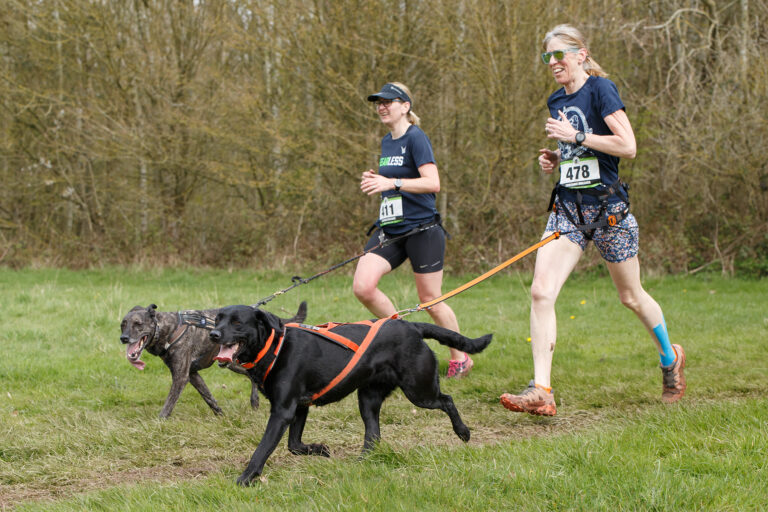
If you are a woman in your 60s who loves running and you are googling how to stay injury free running in your 60s, you are in the right place. I am Louise, I am 61, I have been teaching Pilates for 26 years, I run, I Canicross, and last year I completed my first triathlon in 30 years. I know what it takes to keep an older body running well. And I want to share it with you.
What actually happens to our bodies in our 60s and how to stay injury free running in your 60s
Here is something nobody tells you enough. From midlife onwards, we lose around 0.5–1% of our muscle mass every year, and muscle strength can decline by 1.5–5% annually becoming clinically significant when we reach our 60s and 70s. This is not scaremongering; it is just biology.
For women it is compounded by menopause. The loss of oestrogen is associated with accelerated reductions in muscle mass, strength and neuromuscular function. Which means that if you are a woman in your 60s running without doing anything to support your strength, you are fighting a battle on two fronts.
Less muscle means less stability around the joints, less power through the stride, and a much higher risk of the kind of overuse injuries that sideline us for months. The good news is that moving your body regularly, specifically resistance training can increase strength and reverse muscle loss.
Pilates is resistance training. Don’t let anyone tell you otherwise.
Why running alone is not enough
Running is brilliant. I will never tell anyone to stop running. But there is something important to understand about it running is mostly forward-plane movement (running in the same direction). That means it does not fully train hip stability, trunk control, single-leg balance or pelvic control.
It loads the same muscles and movement patterns over and over again. Without the counterbalance of strength and mobility work, that repetition can start to cause problems tight hips, weak glutes, an overworked lower back, knees that start to complain.
Pilates targets exactly those gaps. It works the smaller stabilising muscles that running ignores. It restores mobility in the hips and thoracic spine. It builds the kind of deep core strength that actually transfers to your running, not the superficial stuff, but the deep stabilisers that protect your spine and pelvis on every single stride.
What the research says about Pilates for runners over 60
I have been teaching Pilates for 26 years and I have always known what it does for people. But it is good to know the science is catching up.
Studies show that people who do Pilates regularly see significant increases in strength, with noticeable improvements in core strength and balance in as little as four weeks if you do it consistently. For runners, that core strength is everything, it is what keeps your pelvis stable, your form together, and your hips from collapsing when you are tired.
Research also shows that Pilates improves balance, flexibility, muscle strength and posture, all essential for preventing injuries and maintaining independence as we age. Pilates may actually be more effective for improving balance than general physical exercise.
Balance matters enormously when you are running on uneven terrain, navigating trails, or simply asking your body to do something demanding late in a race. It is not a nice-to-have. It is injury prevention.
Is Pilates enough on its own?
I want to be straight with you here, because honesty matters more than a hard sell.
Pilates builds real functional strength particularly through the core, hips, glutes and postural muscles. But for women in their 60s who want to stay as strong as possible, it works best alongside your running and some form of strength training, rather than instead of it. Think of it as the foundation that holds everything else together the movement work that makes your running more efficient and your strength training more effective.
At Studio 44 Pilates we combine Pilates with strength work specifically designed for runners, because that combination is where the real results are.
How to stay injury free running in your 60s — where to start
If you are not currently doing any Pilates or strength work alongside your running, a simple 2–3 sessions per week is a great starting point. Focus on:
Single-leg work:
this is the closest thing to running in terms of the demands it places on your hip stabilisers and glutes.
Hip strength:
weak hips are behind the majority of running injuries I see. Strengthening here protects your knees, your ITB, your lower back.
Trunk control:
not just crunches, but the deep rotational and anti-rotation work that keeps your spine supported when you run.
Controlled loading:
learning to load your joints through a full range of movement, which builds resilience and reduces the risk of overuse injuries.
You do not need to overhaul everything. You just need to start filling in the gaps that running leaves open.
The bottom line
I trained for my triathlon comeback at 60 alongside a consistent Pilates practice. I genuinely believe that is why I crossed the finish line feeling strong, not broken.
Your 60s can be some of your best running years but only if you give your body the support it needs to keep up with you. Keep running. Keep moving. Just stop doing it without a safety net.