
Post-Marathon Rehab: Why Pilates Is Your Best Friend
You’ve just completed a marathon — whether it was your first or your tenth, the achievement is massive! You’ve spent months training, staying focused, and pushing your limits. Race day arrives, the adrenaline is pumping, the euphoria is real (hopefully no DNF!), and you cross that finish line with pride.
You celebrate, and rightly so. Go out, enjoy yourself — but remember to keep moving gently in the days that follow. Because here’s the thing: the race might be over, but the recovery has just begun.
Post-marathon rehab is just as important as the training itself — maybe even more. This is your chance to help your body recover well, restore balance, and build long-term strength. Don’t let all that hard work go to waste.
Your body has carried you through an incredible feat. Now it’s time to give it some well-deserved TLC.
Post-Marathon 7 day Plan with Pilates
Here’s a simple 7-day post-marathon Pilates recovery plan to guide you through a gentle, mindful return to movement.
Day 1 – Total Rest + Breath & Body Awareness
Activity: Very light walking (5–10 minutes), naps, lots of hydration, and if possible — a sports massage.
Pilates Focus:
Ease yourself onto the mat and reconnect with your body. Focus on your breath. Notice the sensations in your muscles, joints, and feet. Let go of tension, don’t force anything — this is about awareness and release, not effort.
Breathing exercises (deep belly breathing)
Focus on where the aches and pains are!
Foot stretches: point and flex, circle the ankles, roll a ball under the feet
Day 2 – Gentle Mobility
Pilates Focus: A mat-based mobility session to reintroduce smooth, gentle movement.
Suggested Exercises (1 minute each, move slowly and intentionally):
Cat-Cow stretch
Frog/Swan: Shift forward and back, encouraging gentle extension through the spine
Shoulder Bridge
Russian Twist
One-Leg Circle: Small, controlled movements
Aim to bring full articulation and flow into your joints.
Day 3 – Pilates Recovery Flow
Today is about building gentle flow and breath-to-movement connection.
Pilates Focus:
Pelvic tilts
Russian twists
Shoulder bridge (progressively building)
Side kick: raise top leg, move it forward and back (bottom leg bent)
Side-lying chest opener
Cat stretch
Child’s pose
Thread the needle
Tip: Move slowly and breathe deeply — the goal is to release and realign.
Day 4 – Active Recovery + Pilates for Feet & Hips
Begin to add more active standing work to support joint mobility and balance.
Standing Pilates Focus:
Hip circles
Leg swings (front to back)
Calf raises
Standing swimming
Single-leg balance (try barefoot)
Standing clam
Hip flexor stretch
Calf stretch against the wall
Support the lower limbs with mobility and alignment work — your feet and hips will thank you!
Day 5 – Pilates Strength & Core Integration
Now we start rebuilding strength. Light resistance (bands or magic circles) can be introduced here.
Pilates Strength Sequence:
The 100 (start with a build-up if needed)
Shoulder Bridge
Side Plank (low level to start)
Full Plank
Loop band: standing exercises for glutes and hips
Swimming (prone)
Leg lifts to the side
Running man (standing balance & control)
Keep movements controlled — strength with stability is the goal.
Day 6 – Optional Light Jog + Pilates for Runners
If you’re feeling ready, try a light jog (5–10 minutes max). Then return to the mat for functional Pilates that supports your running form.
Pilates Focus:
Swan dive (prone extension)
Swimming on all fours
Kneeling shoulder rolls and backward arm circles
Shoulder Bridge with one leg lifted
Russian twists
Full-body stretch
Roll-up with spine stretch
Focus on posture, breath, and control. Think of this as reactivating your “runner’s body” with smarter movement patterns.
Day 7 – Body Check + Mobility Flow
Let’s finish the week with a gentle body scan and flowing mobility session.
Suggested Flow:
Slow Roll Downs x 3
Swan Dive x 6
Side Kick with leg lifts and circles
Roll-up with spine stretch
Cat stretch transitioning into Downward Dog
Standing balance with eyes closed
This gives you a chance to reflect, tune in, and feel the progress from the past week.
What Comes Next?
This 7-day recovery plan is designed to keep you moving, reconnecting, and rebuilding. But always listen to your body. There’s no rush to return to full training. When you do start running again, be kind to yourself.
Pilates is a fantastic cross-training tool for runners — especially if you’ve struggled with hip tightness, knee pain, calf tension, or lower back issues. It helps improve flexibility, strength, and stability — all of which support injury-free running for the long term.
Need Help With Your Recovery or Running Goals?
Curious how Pilates can fit into your regular training? I offer Run+Pilates performance coaching, where I work alongside running coach Michelle Mortimer to tailor your program to your life and goals.
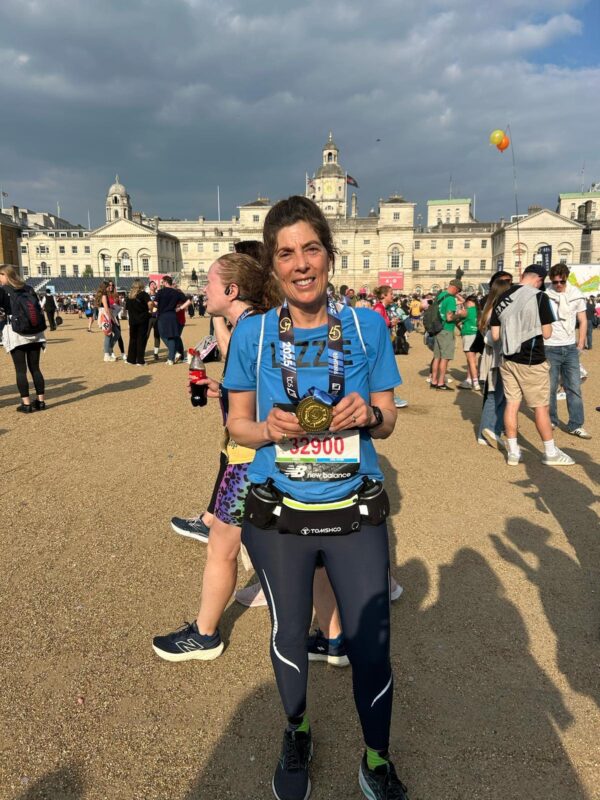
In 2025, we helped Lizzie — a self-proclaimed non-runner — train for and complete the London Marathon injury-free. She now calls us the “dream team” (though we think she did all the hard work!).
She didnt suffer from any injuries like a lot of runners do – you can read here why runner should be adding Pilates to their training
Want to learn more? Contact us here and let’s see how we can support your next running goal — whether it’s your first 5K or your next marathon.