
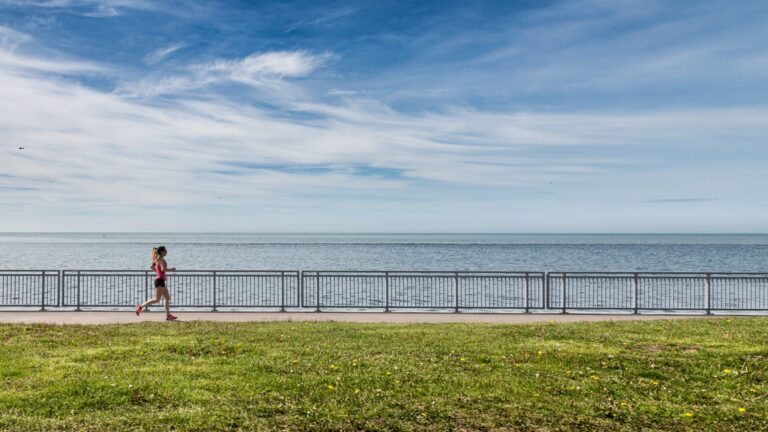
The truth about staying injury-free, running stronger, and still lacing up your trainers in your 40s 50s 60s and beyond.
I don’t talk to my friends about Pilates or training much anymore.
Why? Because I’ve become a bit of a bore about it.
Honestly before I’ve even opened my mouth, they’re already laughing: “I know what you’re going to say.” And then come the excuses. No time. Too tired. They’ll start next month. They’ll sort it out after the next event.
The thing I’m always banging on about? Running foundations.
We wouldn’t dream of building a house without foundations. So why do so many of us try to build a running habit or train for an event without them?
What I Mean By “Running Foundations”
Running foundations are the underlying strength, stability, mobility and control that allow your body to run well, repeatedly, without breaking down.
It’s not the miles. It’s everything that holds the miles up.
For me, Pilates is the foundation. It strengthens the core, builds whole-body strength, and develops the mobility and flexibility we all start to lose from our 40s onwards. It’s the same foundation that supports cycling, walking, hiking, lifting the grandkids and getting up off the floor without making that noise.
The running is the fun bit. Foundations are what let you keep doing it.
Why This Matters More After 40
Here’s the bit nobody likes hearing, so I’ll keep it short.
From our 40s onwards, things start shifting:
- We lose muscle mass year on year (it’s called sarcopenia, and it accelerates after 50)
- Bone density starts to decline, particularly for women going through perimenopause and menopause
- Tendons become stiffer and slower to recover
- Joints need more support from the muscles around them
- Balance and proprioception quietly decline if we don’t actively work on them
The good news?
None of this means you have to slow down. You can absolutely keep getting stronger in your 50s, 60s and beyond. It’s never too late to start. But you do have to train differently than you did at 25.
Stronger muscles pull on bones and help maintain bone density. They stabilise your joints so when you land on an uneven bit of pavement or a root on the trail, your body can handle it. They protect you from the niggles that turn into injuries that turn into months on the sidelines.
That’s what foundations do. They reduce your risk and extend your runway.
“But I’ve Been Lucky Until Now…”
I hear this a lot. “I’ve never had a problem. I’ll be fine.”
And maybe you will. But “lucky until now” is not a training plan. It’s a coincidence you’re hoping continues.
I was talking to my running coach (Miles with Michelle) yesterday about the London Marathon and about my client Maxine, who had an incredible race. You can read about Maxine and her training journey here. After her result, my inbox was full of runners reaching out about Pilates. Most of them had big races coming up.
Here’s what I told every single one of them: yes, we can help. But the runners who build their foundations from the beginning not after the injury, not three weeks before the start line have a completely different experience. Better performance. Fewer setbacks. And they can keep running for as long as they want to.
Injuries can still happen, no one can promise otherwise. But building your foundations dramatically reduces the risk.
“But I Don’t Have Time”
This is the one I hear most.
Runners think it’s about the miles. More miles, longer runs, stick to the plan, get round. If you’re in your 20s or 30s, that often works.
In your 40s, 50s and beyond? It doesn’t. Not on its own.
But here’s the bit that surprises people: you don’t need much time at all.
Ten minutes of Pilates, two to four times a week, done consistently, will make a noticeable difference. Not an hour. Not a complicated programme. Ten minutes.
I often head to the mat straight after my run. It’s nice to lie down, if nothing else. I pop on one of the videos from the membership calendar and just do it. It’s not hard you just need to build it into a routine until it feels weird not to do it.
Two or three short sessions a week is the difference between running into your 60s and 70s or hanging up your trainers at 55 because your back’s gone.

What Building Your Foundation Actually Looks Like
When you commit to your running foundations, you’re working on:
- Core strength — so your form holds up when you’re tired
- Glute strength — the engine of running, and the first thing to switch off
- Hip mobility — so your stride stays long and efficient
- Whole-body strength — so nothing has to compensate
- Balance and control — so you can trust your body on any terrain
You don’t need a gym. You don’t need fancy kit. You need a mat, ten minutes, and consistency.
The Bottom Line
You’re not training for one event. You’re training for the rest of your running life.
Whether your goal is your first 10K, a marathon, or simply still being out there pounding the pavements at 70 your running foundations are what get you there.
Stop training like you’re 25. Start building the foundations that keep you in your sport for life.
Ready to build your running foundations?
Inside my membership, you’ll get short, focused Pilates sessions designed specifically for runners built around a monthly calendar so you always know what to do, and short enough that “I don’t have time” stops being a reason. Plus LIVE classes to keep you accountable.
Join the membership here and start building the foundations your future running self will thank you for.